Status as of November 17, 2026: Water and sewer ownership rules below are from Pittsburgh Water. Chimney, lead-line, and winter issues are covered in more detail in the linked Insights posts.
Most of the houses I walk in Pittsburgh were built a long time ago. Brick, plaster, and a dry-looking listing photo can still hide the systems that cost real money after closing. A general home inspection is worth having. On these houses, it is the starting point, not the whole review.
If you are buying from out of state, this list is also why I don't trust listing photos alone. I covered the rest of that process in How to Buy a Pittsburgh Rental from Out of State.
Foundation
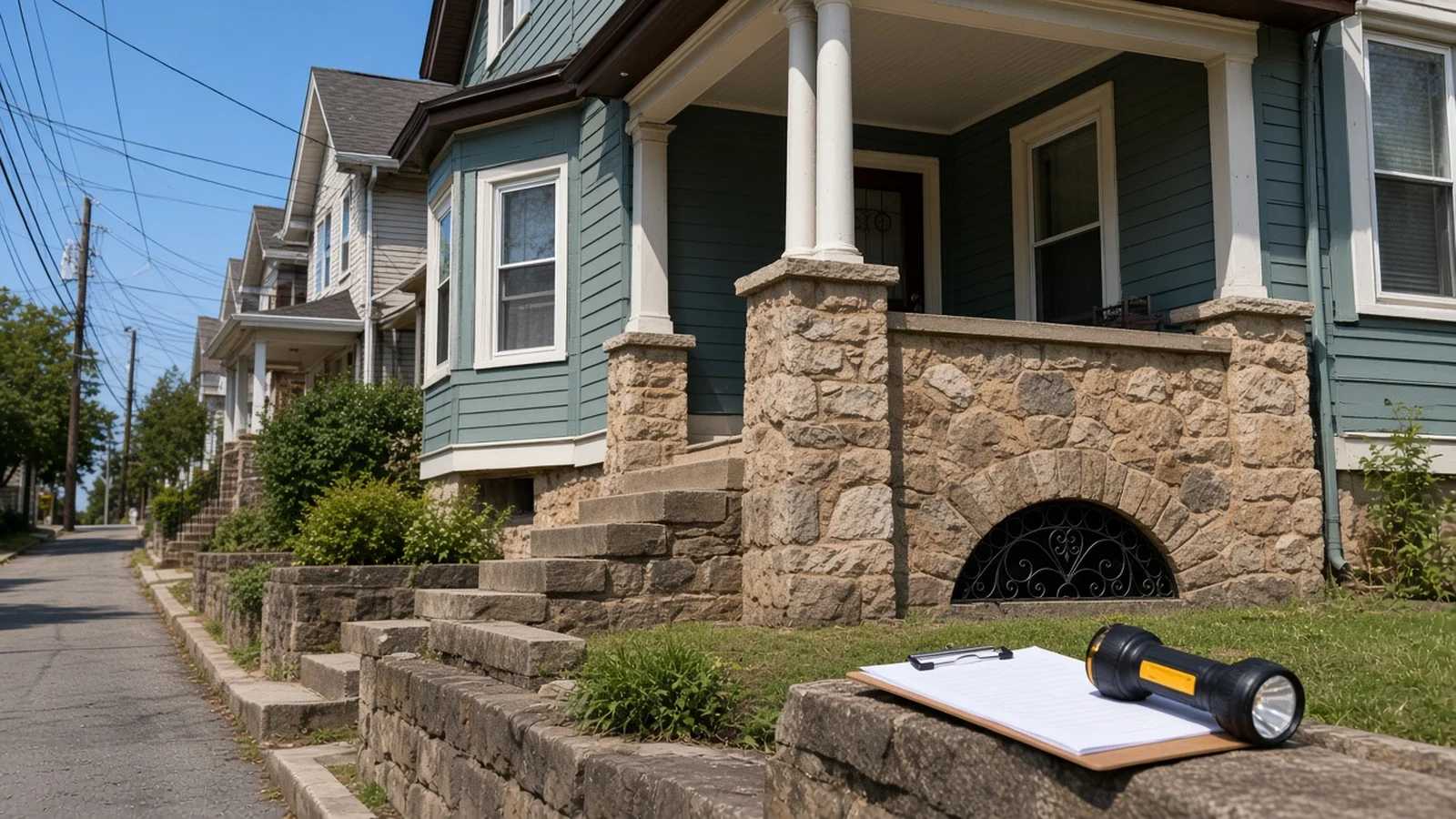
A lot of older Pittsburgh houses sit on rubble-stone or brick foundations. I look for cracks, bowing, mortar loss, signs of long-term seepage, and whether the sill or first-floor framing has been wet. A little efflorescence is common. A wall that has moved, a musty finished basement, or a floor drain that sits in standing water is a different conversation.
Hillside lots add settlement and lateral pressure to that list. If the house is on a slope, I want to see the downhill foundation in daylight, not only the finished rooms.
Retaining walls and the lot
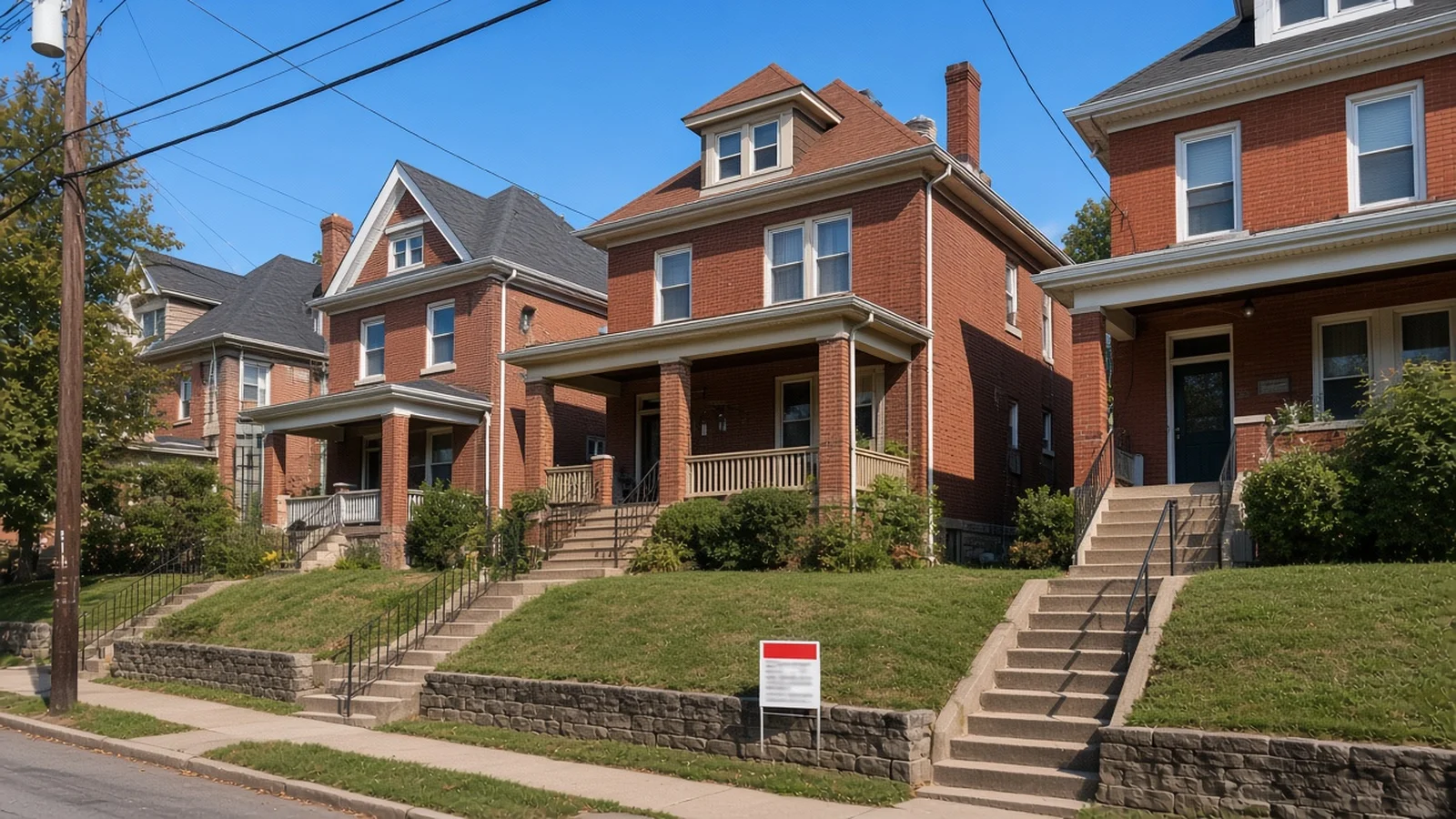
Retaining walls are part of the house in a lot of hillside neighborhoods. I look at what the wall is made of, whether it is leaning or bulging, how water is getting behind it, and whether neighboring walls have already failed. A wall that is still standing in a photo can be near the end of its useful life.
This goes with the landslide and drainage checks I described in Best Pittsburgh Neighborhoods for Rental Property. The official Landslide Prone Areas map is a starting point. The wall and the yard still have to be walked.
Chimneys and venting
Many older houses still have a gas furnace or boiler, and a naturally vented water heater, tied into a masonry chimney. If that chimney is blocked, unlined, or oversized after a furnace upgrade, exhaust — including carbon monoxide — can spill back into the basement. I wrote a full post on chimney backdrafting and CO detectors. Before you buy, have a qualified technician look at the chimney, the connectors, and the draft, not just a visual from the yard.
Electrical, including knob-and-tube
Some older Pittsburgh houses still have knob-and-tube wiring, or a mix of old and new work. I am not an electrician, and I don't guess at a replacement cost from a hallway glance. What I do tell buyers is this: have a licensed electrician evaluate what is there, and talk to your insurance agent before you waive inspections. Some carriers will not write a policy, or will limit coverage, until the old wiring is replaced or isolated. A fuse panel, a small service, or open splices in a basement joist bay belong on the same list.
Lead water service lines
In the City of Pittsburgh, the property owner is responsible for the water service from the curb box to the meter. Pittsburgh Water is responsible from the main to the curb box on typical residential services. A lead or galvanized line on the owner's side is a health, cost, and scheduling issue, and it does not always show up in listing remarks. Look the property up on Pittsburgh Water's lead line map, and have the line identified in the basement at the meter. The details, including replacement and reimbursement programs, are in Pittsburgh Water's 2027 lead line replacements.
Sewer laterals
In the City of Pittsburgh, Pittsburgh Water's ownership page is clear: the entire sewer lateral from the main to the house is the property owner's responsibility. Pittsburgh Water maintains the sewer main and a small portion at the wye. On an older house, I want a camera inspection of that lateral before I treat the purchase as understood. The camera tells you about cracks, bellies, offsets, and roots that a standard home inspection will not.
I go into laterals, camera scoping, and service-line and sewer-backup insurance in a separate post, Sewer Laterals, Camera Inspections, and Backup Coverage. For a city sale, also confirm Pittsburgh Water's Evidence of Compliance process, which may include a dye test of stormwater connections. That is a closing requirement, not a substitute for a camera of the lateral itself.
Heat, plumbing, and winter readiness
A furnace that starts on inspection day is not the same as a heating system you want to own through a Pittsburgh winter. Look at age, venting, shutoffs, and whether the house can be kept warm if a tenant or a vacancy leaves a space underheated. I covered landlord obligations and vendor realities in No Heat, Hotel Bill, and the practical freeze and shutoff steps in winter freeze prep and the winter shutoff moratorium. A main water shutoff you can actually use belongs on the walk-through list.
What I would do as an owner
- Hire a general home inspector, then add specialists for sewer camera work, chimney or heating, and electrical as the first inspection warrants.
- Walk the foundation, the downhill lot, and every retaining wall in daylight.
- Have the chimney and venting checked if a furnace or water heater still uses the masonry flue.
- Ask your insurance agent, in writing, whether they will write the property as it stands, including any knob-and-tube or old wiring.
- Identify the water service material and check Pittsburgh Water's lead line map.
- Camera the sewer lateral, and read the longer sewer post before you skip coverage questions.
- Confirm the main water shutoff, heat, and freeze risks before you close on a winter settlement.
How PRC helps
These systems are a core part of an Acquisition Review. The review includes a site visit, and the written report is delivered five business days after that visit, so you have a local look at the foundation, walls, venting, and services before you close. If you are still at the listing stage, a Desktop Deal Screen can flag obvious issues in two business days, and that fee is credited toward the Acquisition Review.
If you want a second set of eyes on an old Pittsburgh house before you buy, book a free 20-minute discovery call.
Sources
- Pittsburgh Water: Pipe Ownership
- Pittsburgh Water: Community Lead Response
- Pittsburgh Water: Dye Testing
- City of Pittsburgh / WPRDC: Landslide Prone Areas
This is general information about inspecting older Pittsburgh houses, not a home inspection, a code opinion, or legal or insurance advice. Use licensed inspectors, a qualified contractor, and your insurance agent for property-specific conclusions.
Want a second set of eyes on your rental?
Talk with Eddie about your property, your concerns, and the right next step.
Book a free 20-minute discovery call