Status as of November 17, 2026: Market figures below are from Realtor.com (October 2026), Redfin (three months ending October 2026), and Apartment List (November 2026 Rent Report). Tax and program rules are from official county and city sources cited at the end.
People who don't live here often ask me the same question: is Pittsburgh a good place to invest in rental property? The honest answer is that it can be, if you buy the right house at the right price and budget for the building, the taxes, and the rules that come with it. A citywide median will not tell you that. The property in front of you will.
What the market looks like right now
Published numbers don't all agree, because they measure different things. I treat them as a range, not a single "typical" price or rent.
Realtor.com, in its October 2026 snapshot for the City of Pittsburgh, put the median listing price at $259,900, down 6.04% from a year earlier, and the median sold price at $281,500, up 3.87%. It reported 3,607 active listings (up 15.21% year over year), 57 days on market, a sale-to-list ratio of 99%, and a median rent of $1,500 a month, up 0.33% from a year earlier. That same page described Pittsburgh as a buyer's market in October 2026.
Redfin, using a different method and the three months ending October 2026, put the city's median sale price at $254,823, up 4.7% year over year, with a median of 65 days on market and a sale-to-list ratio of 95.8%. Redfin also reported that Pittsburgh's median sale price was 36% lower than the national average in that period.
Rents depend on the source too. Apartment List's November 2026 Rent Report put the city's overall median rent at $1,400, up 1.1% year over year, with a median of $1,220 for a one-bedroom and $1,486 for a two-bedroom. Realtor.com's $1,500 figure is a listing-rent median from the same October snapshot.
Those figures are useful for orientation. They are not a substitute for underwriting one address against nearby sales, actual taxes, insurance, vacancy, management, and the capital work an older house is going to need.
Why out-of-town buyers look here
Purchase prices are still more approachable than in many coastal and large Sun Belt markets, and the current inventory and days-on-market figures give a buyer more time to inspect than a bidding-war market would. Pittsburgh also has a large employment base in health care and universities, which supports rental demand in a lot of neighborhoods, not only the ones that show up in national headlines.
That combination is why I hear from owners who live out of state or out of the country. The distance is manageable if you have a local team and you don't skip the walk-through. It is a problem if you buy from listing photos and a citywide average rent.
The trade-offs that change the numbers
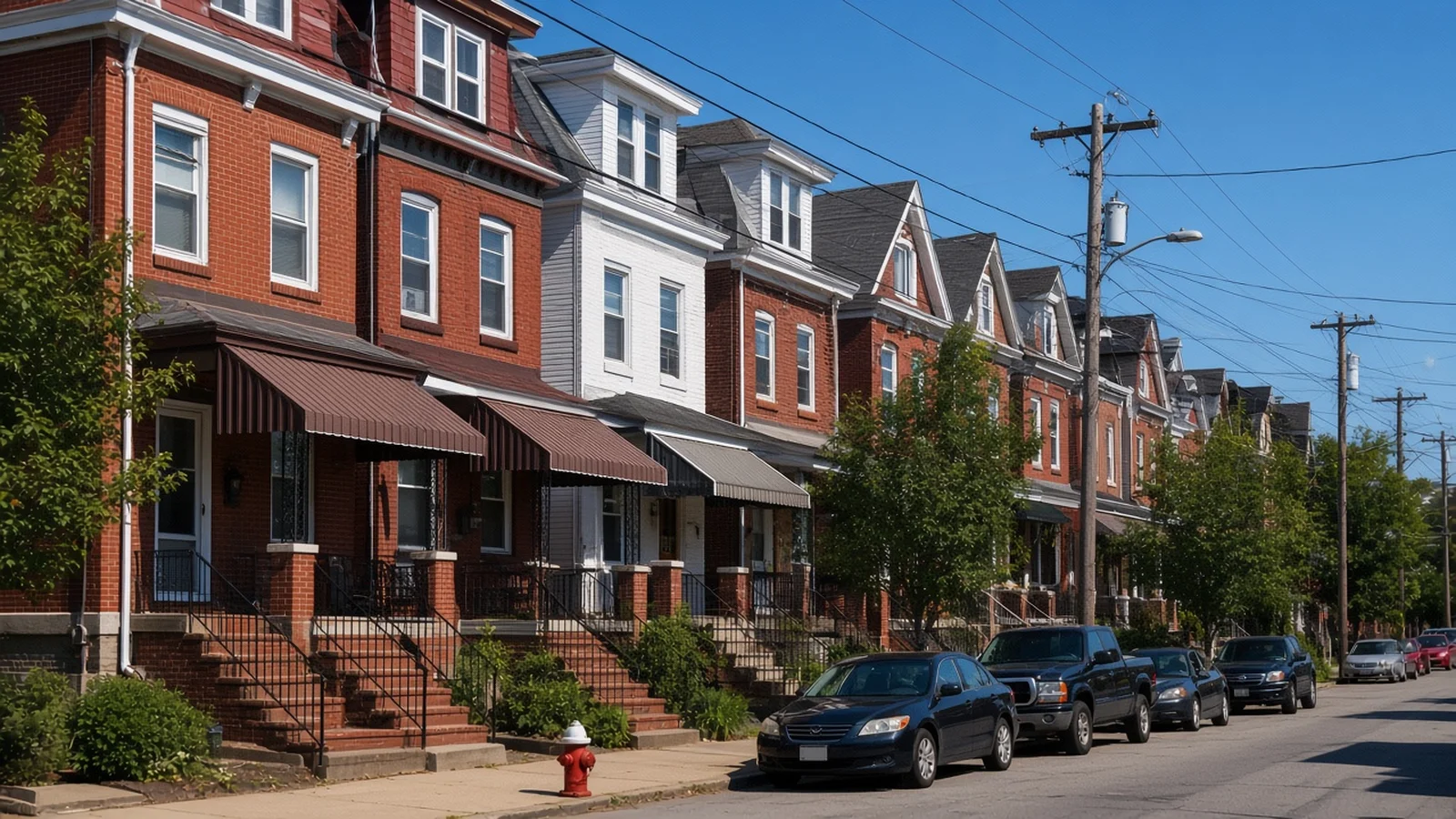
The housing stock is old. Brick, plaster, and a tight lot can look charming in a photo and still hide a sewer lateral, a lead water service, knob-and-tube wiring, a hillside retaining wall, or a chimney that backdrafts carbon monoxide. Those items belong in the offer math, not in a surprise after closing.
Taxes are easy to get wrong. Allegheny County still bills against 2012 base-year assessments, so two similar houses can carry very different tax bills, and a purchase price is not the assessed value. A countywide reassessment is scheduled to begin by July 1, 2027. In the City of Pittsburgh, the combined 2026 county, city, and Pittsburgh Public Schools millage is 26.557 mills, or $2,655.70 a year on a $100,000 assessed value, per the county's community profile. Owner-occupant relief, including the homestead reduction and the county's longtime owner-occupant program, generally does not apply to investment rentals.
Closing costs are higher in the city than in most of the suburbs. On most City of Pittsburgh parcels, the realty transfer tax is 5% of the consideration (1% to the Commonwealth, 3% to the city, and 1% to Pittsburgh Public Schools). On a $250,000 purchase, that is $12,500 at closing. In many nearby boroughs and townships the combined state and local rate is 2%, or $5,000 on the same price. Who pays is a contract term, but the tax itself is not optional.
The City's Residential Housing Rental Permit Program is still voluntary as of the city's latest posted notice, but the fees are already on the 2026 schedule, and the city has said it will give 30 days' public notice before full enforcement. Pittsburgh has also been debating a Fair Share tax on unearned income in the 2027 budget talks. Neither item should be ignored in a long-hold underwriting.
Winter operations are real here. Heat failures, freeze-ups, and utility shutoff rules are part of owning these houses, not edge cases. I covered the practical side of that in the posts on no-heat relocation, winter shutoffs, and freeze prep.
Neighborhoods matter more than the citywide number
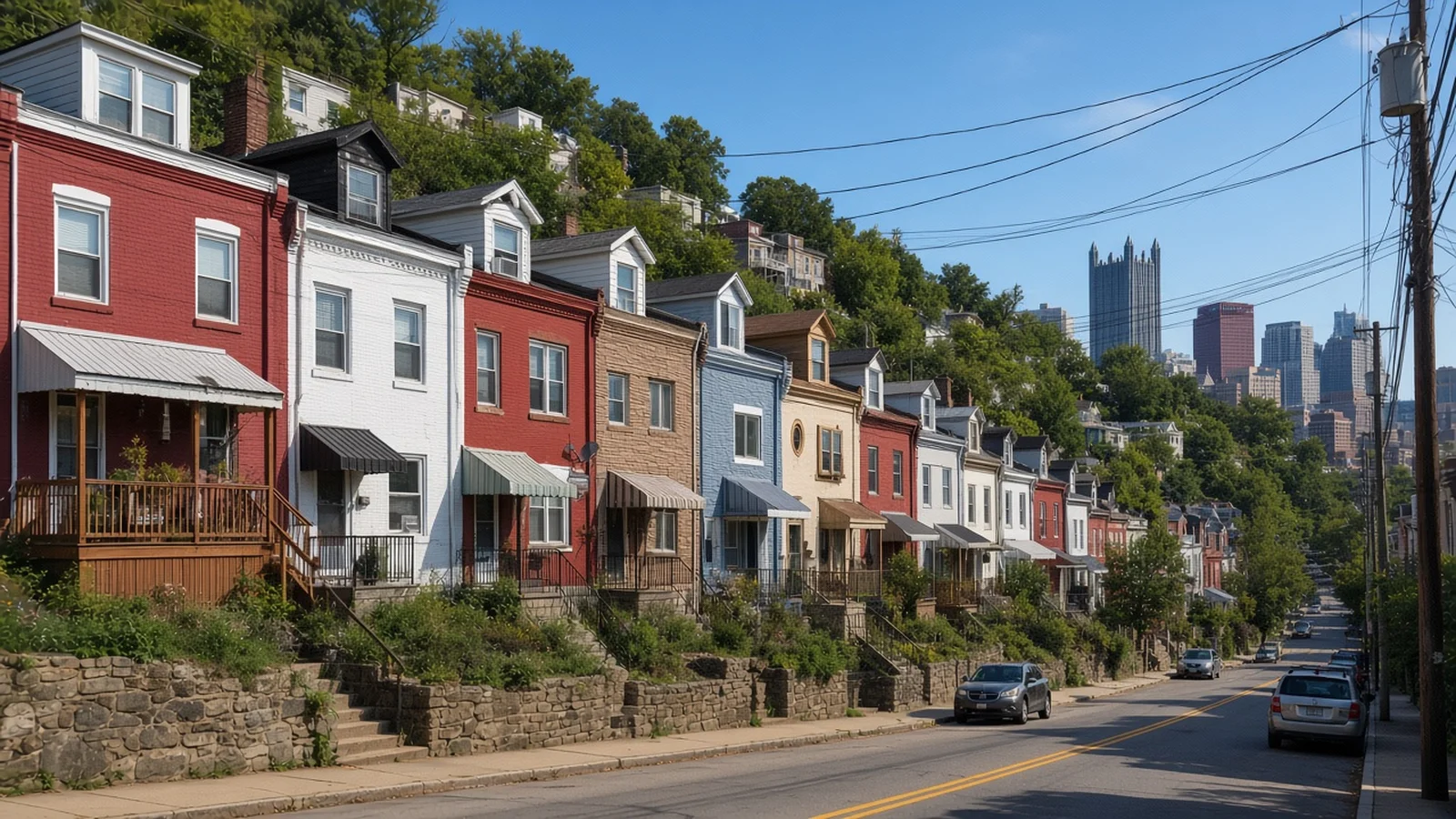
A median hides a wide spread. Listing prices and rents in Shadyside or Squirrel Hill South do not look like listing prices and rents in Carrick or Brookline, and a borough just outside the city line can have a completely different transfer tax, occupancy inspection, and school millage. Hills, public steps, floodplains, and landslide-prone slopes are property-level issues, not neighborhood slogans. I walk through that in more detail in Best Pittsburgh Neighborhoods for Rental Property.
What I would do as an owner
- Underwrite the specific address, not a citywide median price or rent.
- Pull the current assessed value and tax bill, then run a reassessment scenario, not just this year's payment.
- Include transfer tax at the rate that applies to that municipality, especially the city's 5%.
- Budget for old-house capital work: sewer, water service, electrical, chimney, foundation, and retaining walls.
- Confirm insurance before you waive inspections, including whether the carrier will write the property as it stands.
- If you will not be here, have a local manager or operator lined up before closing, not after the first after-hours call.
How PRC helps
A Desktop Deal Screen is the right first step when you are still deciding whether a listing is even in range. It is a desktop review with a two-business-day turnaround, and the fee is credited toward an Acquisition Review if you move forward. The Acquisition Review includes a site visit and is delivered five business days after that visit, so you have a local set of eyes on the house before you close.
If you want help deciding whether a Pittsburgh rental is worth pursuing, book a free 20-minute discovery call.
Sources
- Realtor.com: Pittsburgh, PA Housing Market (October 2026 snapshot)
- Redfin: Pittsburgh, PA Housing Market (three months ending October 2026)
- Apartment List: Pittsburgh Rent Report, November 2026
- Allegheny County: City of Pittsburgh community profile (2026 millage and tax on a $100,000 assessment; residential median assessed value as of November 13, 2026)
- Allegheny County: Local Realty Transfer Tax Rates
This is general information about investing in Pittsburgh rental property, not legal, tax, or investment advice. Confirm current taxes, fees, and program rules with the county, the municipality, and your own advisors before you offer or close.
Want a second set of eyes on your rental?
Talk with Eddie about your property, your concerns, and the right next step.
Book a free 20-minute discovery call