Status as of November 17, 2026: Neighborhood listing prices and rents below are Realtor.com median figures from the same October 2026 Pittsburgh market page used in the citywide snapshot. They are listing medians, not sale prices or a ranking of "best" areas.
"What's the best neighborhood in Pittsburgh for a rental?" is usually the wrong question. The better one is: which streets fit the tenant pool, the rent, the tax bill, and the condition of the building you are actually buying? A strong East End listing and a cheaper South Hills house can both work. They do not work for the same reasons, and they do not fail in the same ways.
Prices and rents vary more than the citywide number
Realtor.com's October 2026 snapshot put the City of Pittsburgh's median listing price at $259,900 and the median listing rent at $1,500 a month. The same page's neighborhood figures show how wide the spread is. These are listing medians from that snapshot, not appraisals and not a promise of what a given house will rent for:
| Area | Median listing price | Median listing rent |
|---|---|---|
| Shadyside | $503,675 | $1,980 |
| Squirrel Hill South | $399,950 | $1,475 |
| Mt. Lebanon | $397,100 | $1,552 |
| East End | $375,000 | $1,620 |
| Downtown Pittsburgh | $374,900 | $2,035 |
| South Side Flats | $294,875 | $1,800 |
| Whitehall | $275,000 | $1,950 |
| Mount Washington | $259,925 | $1,500 |
| Baldwin | $244,900 | $1,079 |
| North Side | $232,500 | $1,497 |
| South Side Slopes | $232,400 | $1,425 |
| Brookline | $230,925 | $1,298 |
| South Side | $214,950 | $1,450 |
| Carrick | $158,850 | $1,250 |
A higher listing rent does not automatically mean a better investment. Downtown and Shadyside list higher rents and higher prices. Squirrel Hill South's listing-rent median in this snapshot is lower than its listing-price median would lead a first-time out-of-town buyer to expect. Carrick and Brookline list lower, which can look like cash flow until you add taxes, insurance, vacancy, management, and the work an older house needs.
Treat every row as a starting point for a Deal Screen on a specific address, not as a cap rate.
City neighborhoods, in practical terms
I group a lot of city inventory the way owners actually buy it.
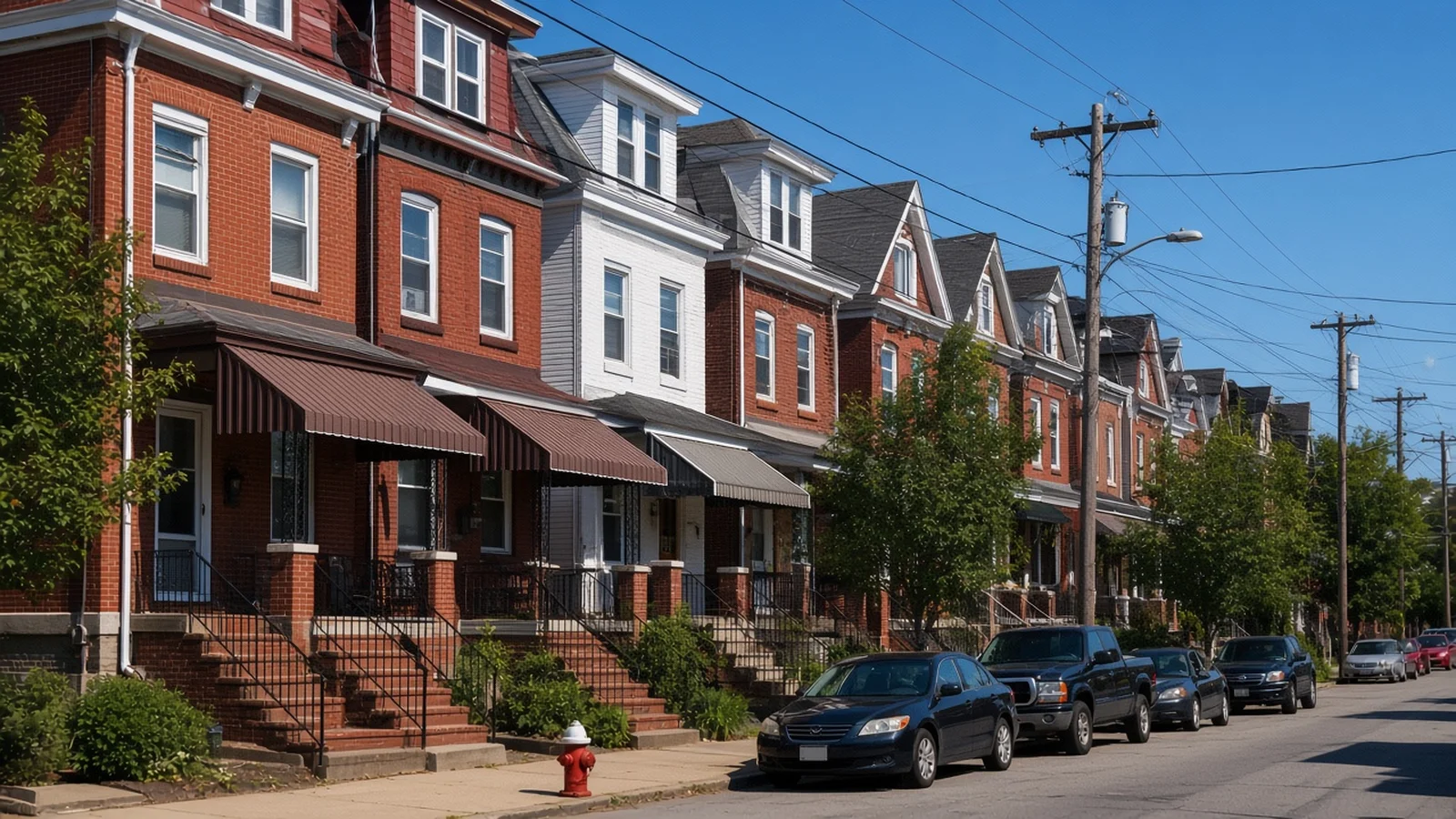
East End. Shadyside, Squirrel Hill, and the broader East End listings in the table above sit at the higher end of city prices. You are often paying for location, schools, and a deep renter pool near universities and hospitals. You are also paying more at purchase, and you still have to inspect the building. An expensive neighborhood does not exempt a house from a bad sewer lateral or an old chimney.
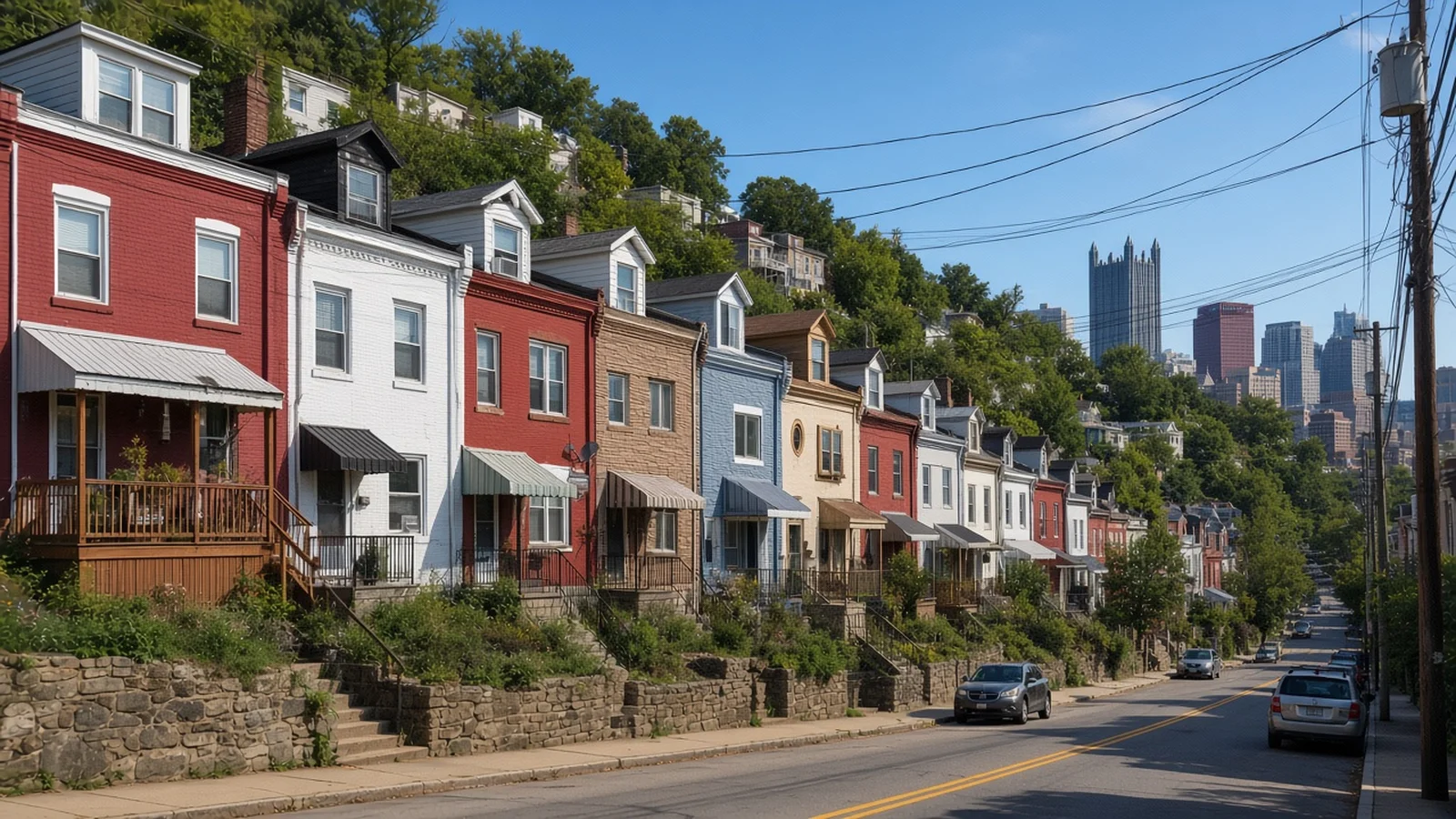
South Side Flats and South Side Slopes. These are close on a map and very different on the ground. The Flats are lower, denser, and more walkable to nightlife and transit. The Slopes climb the hill. List prices in the October snapshot were higher in the Flats ($294,875) than in the Slopes ($232,400). On the Slopes, I pay closer attention to access, parking, public steps, retaining walls, and drainage.
North Side. The October listing median was $232,500, with listing rents close to the citywide figure. The North Side is not one market. Blocks change quickly. Walk the street, not just the house.
Brookline, Carrick, and similar South Hills city neighborhoods. These are often the listings that look "affordable" to someone coming from a more expensive city. The October listing medians were $230,925 in Brookline and $158,850 in Carrick. The houses can work. They can also be older, on hills, and more sensitive to a weak inspection or a thin reserve.
Mount Washington. The listing median in that snapshot sat right on the citywide figure. The views are real, and so are the hillside issues: access, walls, and, in some locations, slope stability.
Zoning rules also vary by parcel, including accessory dwellings and parking. Don't assume a unit mix or a parking plan from a listing description.
Nearby boroughs are not "the city with a different zip code"
Mt. Lebanon, Baldwin, and Whitehall show up on the same Realtor.com table, but they are separate municipalities. That changes the tax bill, the realty transfer tax, and the occupancy or resale inspection you may need before closing or before a new tenant moves in. I cover those rules in Pittsburgh Rental Permit and Inspection Rules and the tax math in Pittsburgh Property Taxes: What Investors Pay.
A borough house can be a better fit for some owners, especially if you want to avoid the city's 5% transfer tax. It can also carry a higher school millage or a strict occupancy inspection at every tenant change. Check the municipality, not just the Pittsburgh mailing address. Many properties outside the city still have a Pittsburgh mailing address.
Red flags I want you to check on the ground
Hills and city steps. Pittsburgh is built on steep slopes. The City maintains a public dataset of its outdoor stairways, and it is common in hillside neighborhoods for a "walk-up" to include a public stair between streets. That affects tenant access, move-ins, winter maintenance, and how you or a contractor reach the building. If the listing photos are all shot from the porch, ask how you get from the street to the door, and how a tenant gets groceries and trash out.
Landslide-prone slopes. The City publishes an official Landslide Prone Areas map, available through the Western Pennsylvania Regional Data Center. A pin on that map is not a reason to walk away by itself, but it is a reason to look hard at retaining walls, drainage, yard movement, and neighboring failures. Hillside neighborhoods are where I start that check, then I confirm the parcel on the official layer.
Floodplains. The City participates in the National Flood Insurance Program. Properties in a Special Flood Hazard Area (FEMA zones A, AE, or AE Floodway) fall under Pittsburgh's Flood Plain Overlay. A lender with a federally backed mortgage will generally require flood insurance in those zones, and most standard homeowners or landlord policies do not cover flood. Along the rivers and in areas such as the Saw Mill Run corridor, I look the address up on FEMA's National Flood Hazard Layer and the City's "Current 1% Chance Annual Flood" map before I treat the insurance quote as complete.
Old housing stock. Age shows up as systems, not as a quaint description. Sewer laterals, lead service lines, knob-and-tube wiring, rubble foundations, hillside walls, and chimney venting are the items that change a "good neighborhood" purchase into a problem property. I walk through that list in What to Inspect on an Old Pittsburgh House.
What I would do as an owner
- Compare the address to nearby sales and rents, not to a citywide median or a neighborhood nickname.
- Confirm the municipality and school district. A Pittsburgh mailing address can sit in a borough.
- Walk the access: parking, steps, alley, and how a tenant actually enters the building.
- Check the City's landslide-prone map and FEMA or City flood maps for that parcel.
- Look at retaining walls, drainage, and neighboring slope conditions, not only the interior.
- Budget old-house systems separately from paint and fixtures.
How PRC helps
A Desktop Deal Screen is built for this comparison. In two business days we can tell you whether a listing's price, taxes, and location issues are even in range, and the fee is credited toward an Acquisition Review if you go further. The Acquisition Review includes a site visit, which is the only reliable way to judge hills, walls, access, and condition.
If you want help narrowing neighborhoods or reviewing a specific address, book a free 20-minute discovery call.
Sources
- Realtor.com: Pittsburgh, PA Housing Market (October 2026 citywide and neighborhood listing medians)
- City of Pittsburgh / Western Pennsylvania Regional Data Center: City of Pittsburgh Steps
- City of Pittsburgh / Western Pennsylvania Regional Data Center: Landslide Prone Areas
- City of Pittsburgh, Department of City Planning: Flood Plain Overlay FAQs (February 2018)
- FEMA: National Flood Hazard Layer
This is general information about Pittsburgh neighborhoods and rental property, not legal, tax, or investment advice. Confirm maps, taxes, and municipal rules for the specific parcel before you offer or close.
Want a second set of eyes on your rental?
Talk with Eddie about your property, your concerns, and the right next step.
Book a free 20-minute discovery call