Status as of November 17, 2026.
A lot of the older houses I walk in Pittsburgh still drain to the street through the original terra-cotta sewer lateral. Clay pipe lasts a long time, until it doesn't. The line shifts, cracks, develops sags (bellies) where wastewater sits, and joints offset. Tree roots find those openings, grow into the pipe, and keep growing until they clog it.
A camera down the line before you buy, and the right insurance endorsements after you own it, are a lot cheaper than finding out the hard way.
Who owns the sewer lateral
In the City of Pittsburgh, Pittsburgh Water is clear: a sewer lateral runs from the Pittsburgh Water sewer main to your internal plumbing, and the entire sewer lateral is the property owner's responsibility. Pittsburgh Water maintains the sewer main and a small portion at the joint, called a wye. The pipe under the yard, the sidewalk, and the street, out to that connection at the main, is yours to inspect, maintain, repair, and replace.
If sewage is pooling in the house, call Pittsburgh Water's 24/7 Emergency Dispatch at 412-255-2423 (press 1). A broken or clogged main is theirs. A broken or clogged lateral is yours. If the backup happens during heavy rain and then drains when the storm ends, Pittsburgh Water says the owner is responsible for the cleanup and is generally not liable for the damage.
Outside the City, the owner is typically responsible for the private lateral to the municipal main. Green Tree Borough and Upper St. Clair Township both say homeowners are fully responsible for maintaining and repairing their sewer lateral. The Insurance Information Institute notes that this often includes the portion in the street or public right of way.
Why old clay lines clog so easily
Terra-cotta laterals were standard in older Pittsburgh housing. Age, ground movement, and nearby trees all work on them. Roots seeking moisture enter at cracks and joints and, once inside, only get larger. A belly holds water and debris. An offset catches whatever is flowing by.
What tenants flush and pour makes a bad line worse. Tampons, paper towels, wipes, and grease going down kitchen drains hang up much more easily in a line that already has breaks, shifts, and cracks. In a new line, some of that might pass through. In this market, a new lateral is the exception. Pittsburgh Water and the Insurance Information Institute both warn against putting grease, wipes, paper towels, and feminine products down the drain. I put that in writing at move-in, walk it through with the tenant, and back it with a lease addendum.
Camera-scope the line before you buy
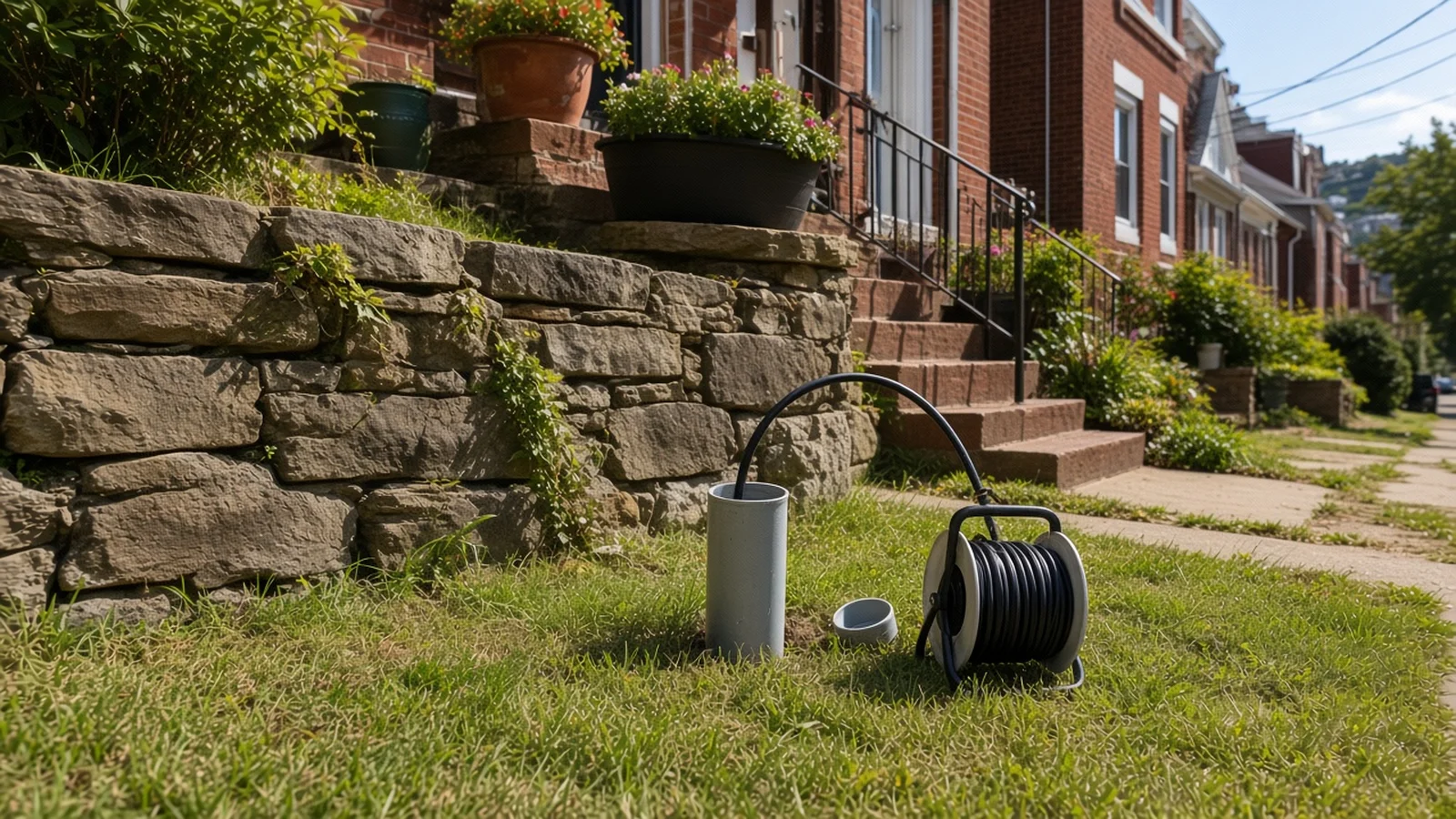
A sewer camera inspection is one of the most useful tools we have before a purchase. A good scope shows the pipe's condition, length, and depth, and whether there are roots, bellies, cracks, or offsets. That is how you estimate how much life may be left in the line and what a repair or replacement is likely to cost.
Do not confuse that with the City of Pittsburgh's dye test. Before any sale in the City, the seller must obtain an Evidence of Compliance Certificate from Pittsburgh Water ($20 processing fee; valid for three years). A dye test is required only in sanitary-sewer areas, to confirm gutters, driveway drains, and other stormwater devices are not tied into a sanitary sewer. Combined-sewer areas do not need one. That process checks for illegal stormwater connections. It does not tell you the condition of the lateral.
Some municipalities, including Bethel Park (since January 1, 2025), Green Tree, and Dormont, also require a video of the private lateral at sale, usually in addition to a dye test. Rules and exemptions differ, so confirm with the borough or township before you close. Even where a camera scope is not required, I still want one before you buy.
Two coverages, not one
A standard homeowners or landlord policy typically will not bail you out here. The Insurance Information Institute states that sewer backups are not covered under a typical homeowners policy, nor by flood insurance. That coverage must be purchased as an endorsement or a separate product, usually at a nominal cost. Pittsburgh Water says standard policies typically do not cover repair or replacement of water or sewer service lines, and that cleanup after a sewage backup may have to be purchased separately.
I want both on a rental:
- Service line coverage pays to repair or replace the buried sewer lateral when it fails. Covered causes often include wear, corrosion, freezing, and tree-root invasion. Limits and deductibles vary.
- Sewer or water backup coverage pays for the damage inside the building when sewage comes back up through a drain. It does not, by itself, pay to dig up and replace the lateral.
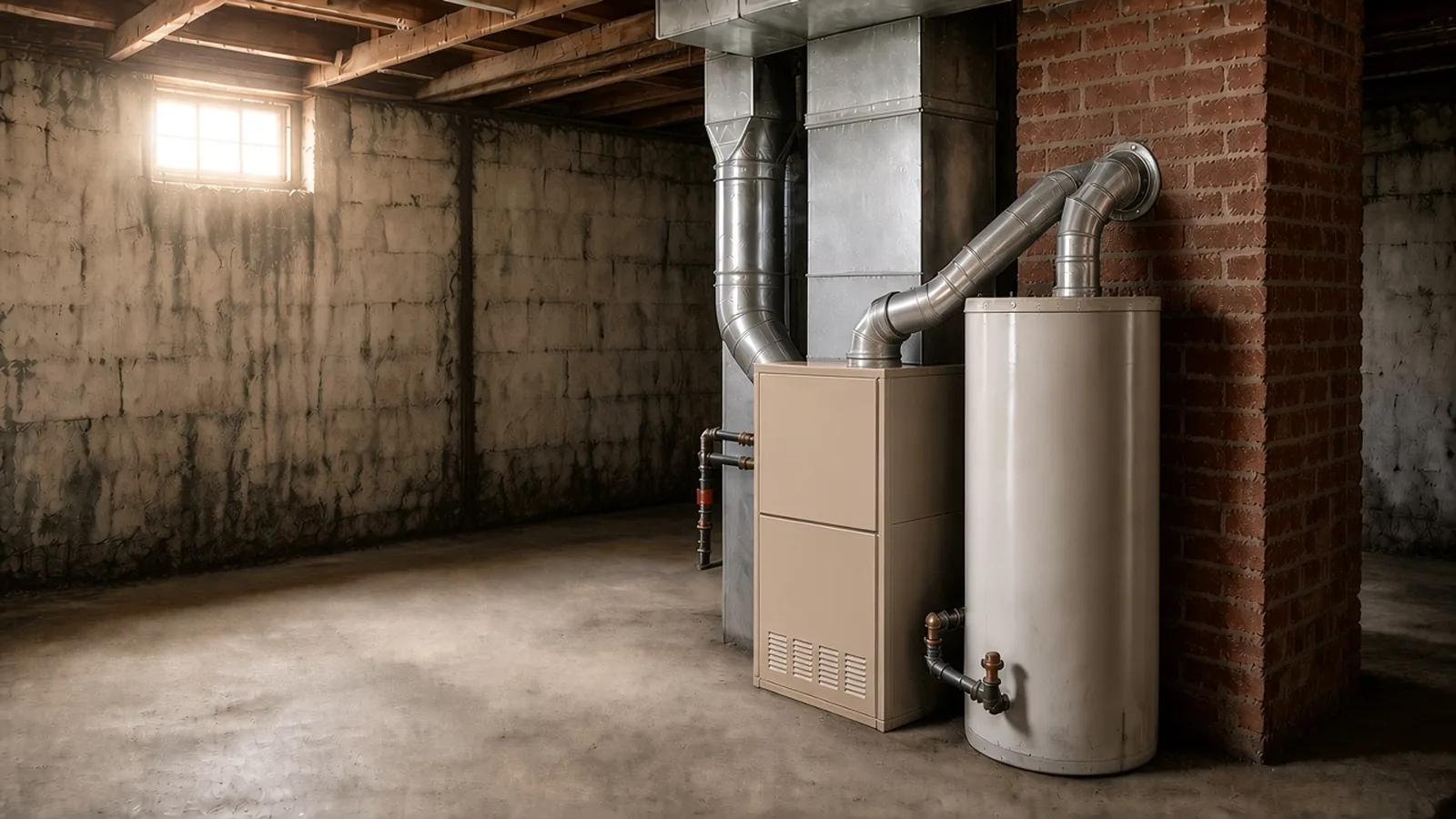
If a basement doesn't drain well and a backup reaches the water heater and the furnace, those appliances can be destroyed, and you still have sewage to clean and sanitize. In my experience in the Pittsburgh market, that work typically runs as follows without insurance:
| What gets damaged | Typical cost, in my experience |
|---|---|
| Furnace replacement | $4,000–$6,000 |
| Water heater replacement | $1,200–$1,700 |
| Sewage cleanup and sanitizing | Varies with how much of the basement is affected |
| Total remediation, including damaged mechanicals | Roughly $8,000–$12,000 |
Those figures are from jobs I have seen and paid for, not a published survey.
I've had to replace and repair many sewer lines. On the properties where I had service line coverage and backup coverage, I saved a tremendous amount of money. In my experience, the added premium is minimal compared with the coverage you receive. Ask your agent for the exact premium, limits, and deductibles, and confirm that both coverages are on the policy.
Pittsburgh Water also offers optional third-party service line protection plans for residential customers. Those plans are warranties, not insurance, and are not required or guaranteed by Pittsburgh Water. It states that repairing a sewer line break in Pittsburgh costs, on average, $3,000 to $10,000, which is the pipe itself, not the basement cleanup.
Backwater valves and a company that answers the phone
A backwater valve is a one-way fitting that lets wastewater leave the building but is meant to keep it from coming back in when the main is surcharged. The Insurance Information Institute recommends one, installed by a qualified plumber. Pittsburgh Water says backwater valves and similar devices should be installed by a certified plumber, must follow City and County codes, and must be considered case by case, because a poor installation can make the problem worse.
Given Pittsburgh's housing stock, it is very valuable to have a drain-cleaning company that responds quickly to stop a backup and can camera the line. I don't publish a vendor list here. If you need a referral, ask us.
What I would do as an owner
- Confirm who owns the lateral (in the City, it is you, out to Pittsburgh Water's wye at the main)
- Before you buy, camera-scope the sewer lateral for condition, length, depth, roots, bellies, and offsets
- Check point-of-sale rules: the City Evidence of Compliance certificate and dye test if required, plus any suburban camera or dye-test ordinance
- Ask your agent whether you have service line coverage and sewer/water backup coverage, and for the limits, deductibles, and premium
- If a basement holds a furnace and a water heater, size backup limits for replacing those appliances plus cleanup
- Put "do not flush wipes, paper towels, or feminine products, and do not pour grease down the drain" in the lease addendum and the move-in walk-through
- Ask a licensed plumber whether a backwater valve makes sense, and have any work permitted as required
- Keep a drain-cleaning company that cameras lines and answers after hours in your vendor file
- If sewage is pooling in a City property, call Pittsburgh Water at 412-255-2423 (press 1), then your plumber and your insurer
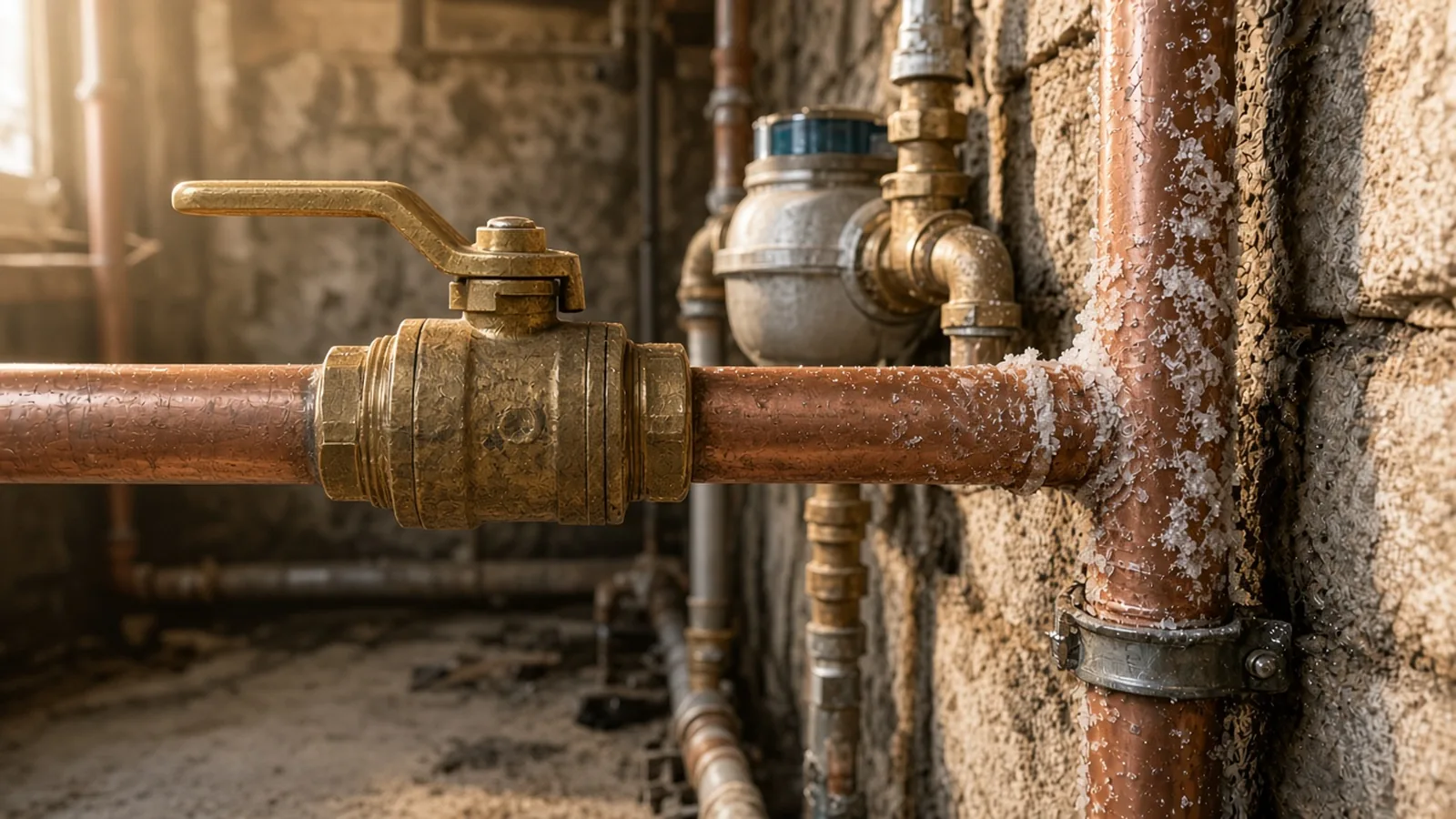
See also winter freeze prep and the main water shutoff, lead service line replacements, and chimney backdrafting and CO detectors.
How PRC helps
A Desktop Deal Screen ($395, or $295 through March 31, 2027) flags older housing and locations where a lateral is more likely to be a problem. An Acquisition Review ($1,995, or $1,495 through March 31, 2027) goes further: we tell you to have the line camera-scoped, help you read the video, and get that cost into your numbers before closing. For buildings you already own, Stabilization & Turnaround Advisory (from $3,500) can build camera scoping, insurance endorsements, tenant drain rules, and a responsive drain contractor into the operating plan.
Want a second set of eyes before you buy, or after a backup? Book a free 20-minute discovery call.
Sources
- Pittsburgh Water: Pipe Ownership
- Pittsburgh Water: Sewage Backups and Flood Preparedness
- Pittsburgh Water: Dye Testing
- Pittsburgh Water: Service Line Protection Programs
- Insurance Information Institute: Which disasters are covered by homeowners insurance? and Protect your house from sewer backups
- Municipality of Bethel Park: Dye Test and Camera Lateral Inspections (camera ordinance effective Jan. 1, 2025)
- Borough of Green Tree: Dye / Lateral Testing
- Borough of Dormont: Code § 170-29, Inspection and Certification
- Township of Upper St. Clair: Sanitary Sewers and Dye Tests
This article is general information for property owners, not insurance, legal, or plumbing advice. Ownership, sale-time inspection rules, and coverage terms differ by municipality, utility, and insurer, and they can change. Confirm requirements with Pittsburgh Water or your municipal sewer authority, the Allegheny County Health Department or your local code official, a licensed plumber, and your insurance agent. If sewage is pooling in the building, keep people out of the contaminated area and call the utility's emergency line and a plumber.
Want a second set of eyes on your rental?
Talk with Eddie about your property, your concerns, and the right next step.
Book a free 20-minute discovery call