Status as of November 17, 2026: City of Pittsburgh dye-test and transfer-tax rules below are from Pittsburgh Water and Allegheny County's official rate table. Market conditions are summarized in Is Pittsburgh a Good Place to Invest in Rentals?.
You can buy a rental in Pittsburgh without living here. I work with owners who do it. The ones who have a decent experience treat this as a local transaction that happens to be signed from somewhere else. The ones who get hurt treat it as an online shopping trip.
A practical sequence
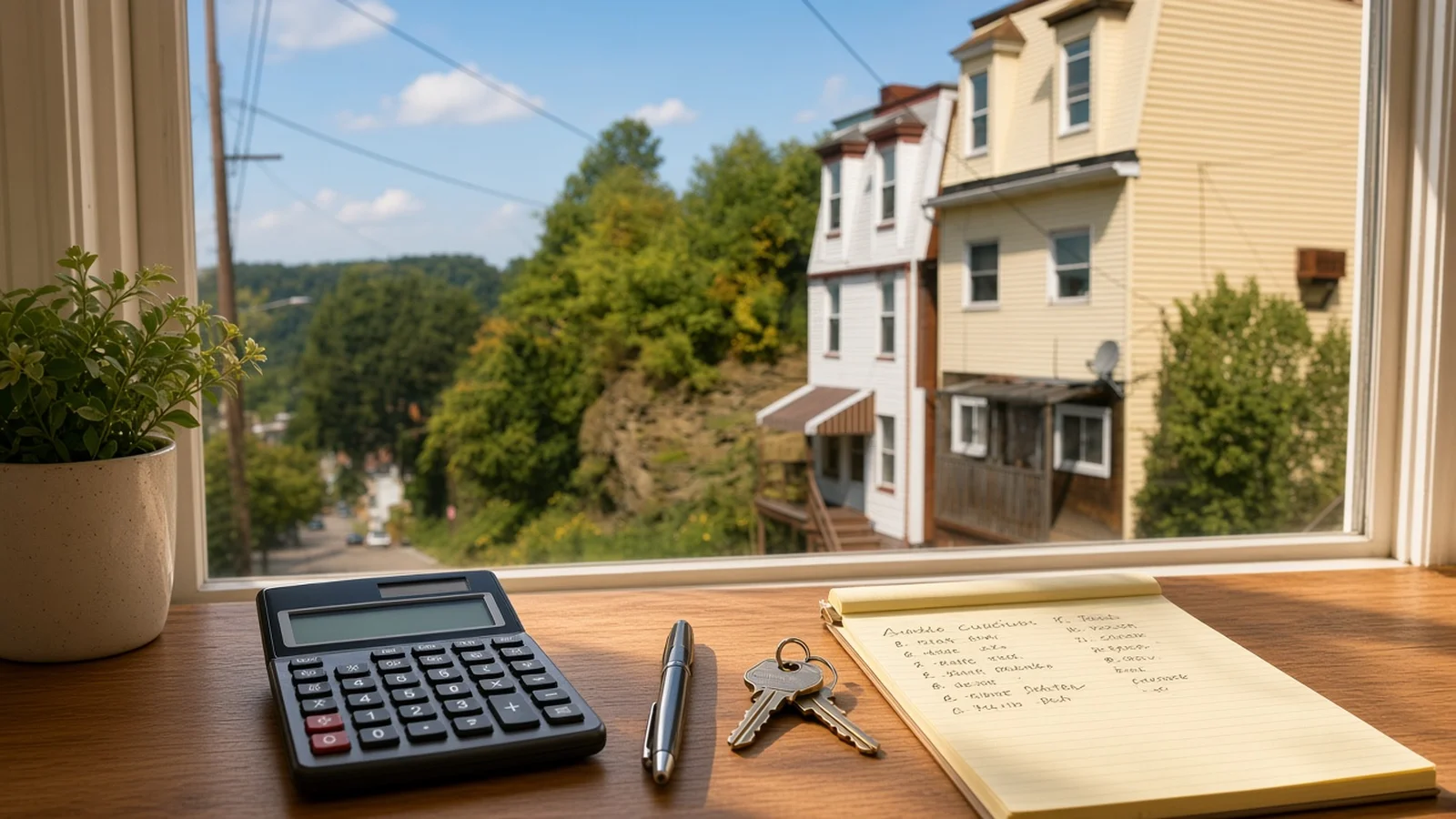
1. Decide what you are buying, and underwrite before you fall in love with a listing. Price, rent, taxes, transfer tax, insurance, and obvious capital work should be on paper before you write an offer. A citywide median will not do that job. Neighborhood differences and the actual tax bill matter as much as the asking price.
2. Put a local team in place early. At a minimum I want a buyer's agent who has worked with investors, a Pennsylvania real estate attorney you can call before you have a problem, a settlement or title company, a home inspector, and an insurance agent who will actually quote the property. If you will not be here to take after-hours calls, you also want a property manager or local operator lined up before closing, not the week a pipe freezes.
3. Screen the deal on paper, then go see the house. Listing photos and a video walk-through are a start. They are not a substitute for a site visit. If you cannot get here yourself, someone who works for you needs to walk the property, the exterior, the access, and the block.
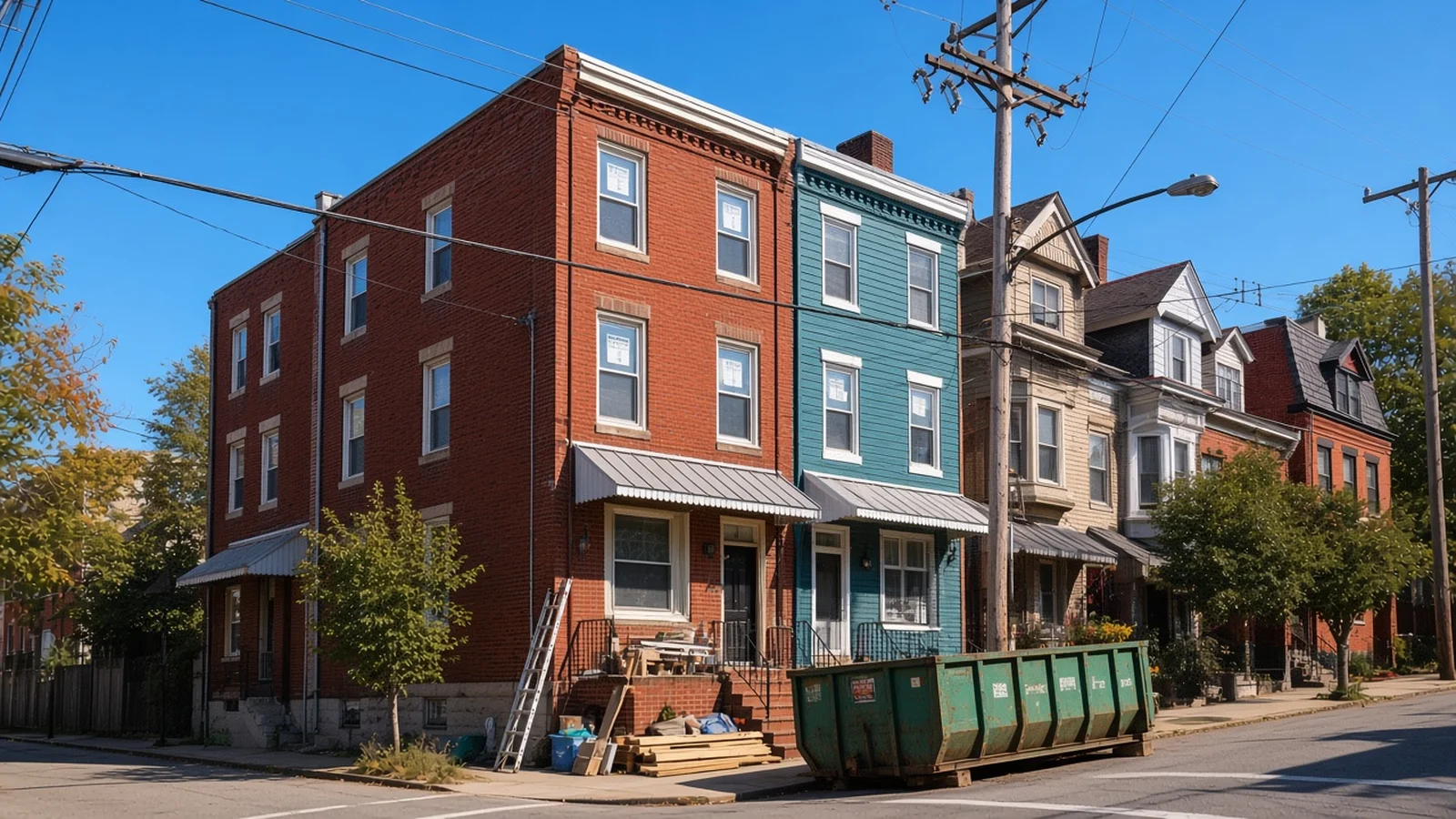
4. Offer with inspections, insurance, and closing requirements in mind. In the City of Pittsburgh, a sale also has to clear Pittsburgh Water's Evidence of Compliance process, which may include a dye test. In many boroughs, an occupancy or use-and-occupancy inspection can stand in the way of closing or of placing a tenant. Build time for that into the contract.
5. Inspect like an old-house buyer. A general home inspection is necessary and not sufficient. Sewer, electrical, chimney, foundation, and water service need their own attention. I walk through that list in What to Inspect on an Old Pittsburgh House.
6. Get the insurance quote before you waive inspections. Some older houses are hard to place because of wiring, roof condition, or prior claims. A policy that cannot be written is a deal issue, not a paperwork afterthought.
7. Close with the right municipal letters, utilities, and a plan for day one. Lien letters, tax certifications, occupancy documents, utility transfers, and keys should be boring. They become expensive when they are left to the last 48 hours from out of town.
What listing photos don't show
Photos are taken to sell the house. They rarely show the things that change the budget:
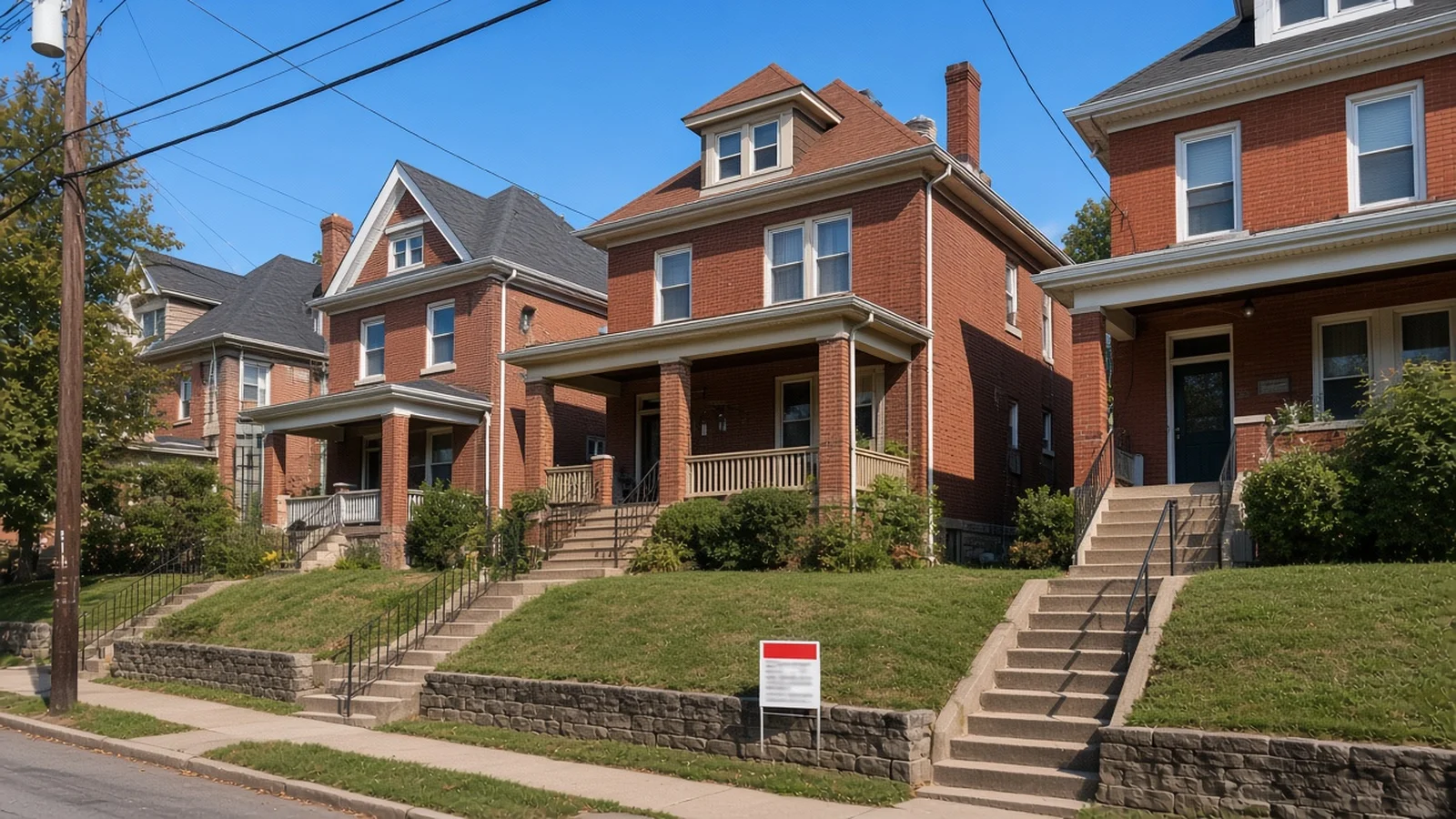
- How steep the street, driveway, or walk is, and whether access is by public steps.
- Retaining walls, yard movement, and drainage on the downhill side of the lot.
- The foundation, the basement floor, and whether the cellar is wet.
- The chimney, the flue, and how the furnace and water heater are vented.
- Knob-and-tube wiring, a fuse panel, or a service that will not support a modern rental.
- The water service material, including a possible lead line.
- The sewer lateral, which you will not see without a camera.
- Parking, alley access, and whether the unit mix is actually legal.
- The block: vacancies, condition of neighboring walls, and how the house sits in a floodplain or on a slope.
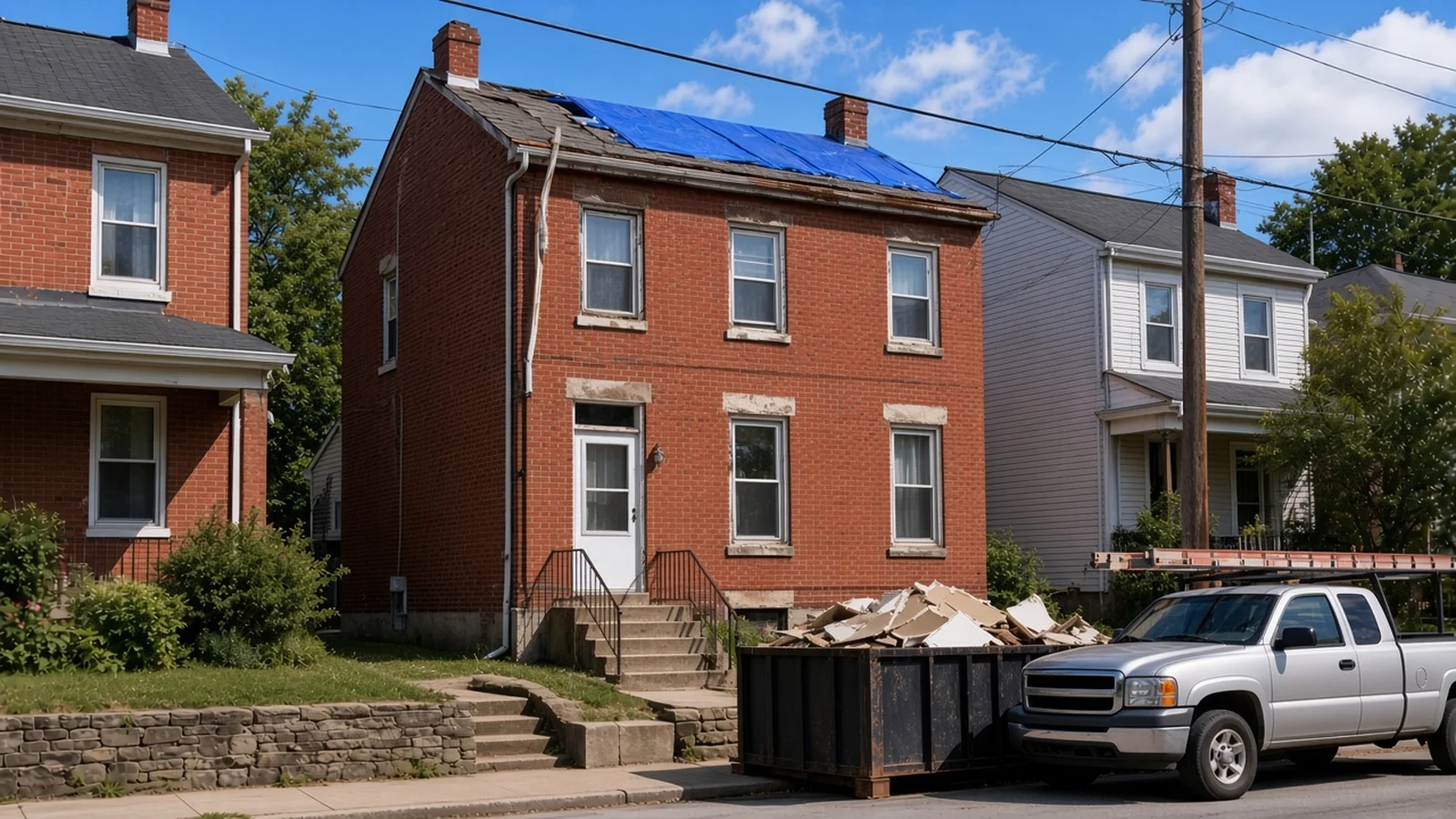
If a listing has no basement photos, no exterior shots from the downhill side, and no roof or chimney detail, that is information.
City sale requirements that surprise out-of-town buyers
Dye test and Evidence of Compliance. Pittsburgh Water requires an Evidence of Compliance Certificate before a property in the City of Pittsburgh can be sold. The application fee is $20. Pittsburgh Water reviews the request and replies within 10 business days, then decides whether a dye test is required. In a combined-sewer area, a dye test is generally not required. In a sanitary-sewer area, a certified plumber or general contractor has to perform the test and submit results. Illegal stormwater connections have to be corrected and retested before the certificate is issued. Certificates are valid for three years. The seller usually handles this, but a buyer should confirm that a current certificate will be in hand, because corrective work can move a closing date.
Realty transfer tax. On most City of Pittsburgh parcels, the combined transfer tax is 5% (1% state, 3% city, 1% Pittsburgh Public Schools). On a $250,000 purchase, that is $12,500. In many nearby municipalities the combined rate is 2%. Who pays is negotiable; the rate is not. Confirm the municipality and school district on the county's official rate table, because a few city parcels are in a different school district.
Rental permits and borough occupancy inspections. The city's rental permit program and suburban occupancy rules are a separate issue from the dye test. I cover those in Pittsburgh Rental Permit and Inspection Rules.
The team I want around an out-of-town buyer
- A local buyer's agent who will tell you when to walk away.
- A home inspector, plus specialists for sewer camera work, chimney or heating, and electrical as needed.
- A Pennsylvania real estate attorney, especially if you are buying in an entity or you will not be at the table.
- A title or settlement company that is used to investor closings.
- An insurance agent who will quote the property as it is, not as it might be after repairs.
- A property manager or local operator, if you are not going to be here.
- A lender experienced with Pennsylvania investment property, if you are financing.
If you are buying from another country, you will also need a plan for a U.S. bank or settlement setup, travel for a site visit if you can make one, and counsel on entity and tax questions. That is attorney and accountant work, not something to improvise from a listing link.
What I would do as an owner
- Underwrite taxes, transfer tax, insurance, and capital work before offering.
- Schedule a real site visit, yours or someone working for you, before you waive inspections.
- Order the inspections that old Pittsburgh houses actually need, not only a general home inspection.
- Confirm the Evidence of Compliance certificate (city) or occupancy requirements (borough) early in the due-diligence period.
- Get a written insurance quote before the inspection contingency expires.
- Have management and after-hours coverage in place before closing if you live out of town.
How PRC helps
An Acquisition Review is built for this kind of purchase. It includes a site visit, so someone is actually walking the house, the exterior, and the issues photos miss, and the written review is delivered five business days after that visit. If you are earlier in the process and only have a listing, a Desktop Deal Screen can tell you in two business days whether the numbers are even worth a trip, and that fee is credited toward the Acquisition Review.
If you are looking at a Pittsburgh rental from out of state or out of the country, book a free 20-minute discovery call.
Sources
- Pittsburgh Water: Dye Testing
- Pittsburgh Water: Buying or Selling Property
- Allegheny County: Local Realty Transfer Tax Rates
This is general information about buying rental property in Pittsburgh, not legal, tax, or investment advice. Confirm current closing requirements with Pittsburgh Water, the municipality, your attorney, and the settlement company before you waive contingencies or schedule a closing.
Want a second set of eyes on your rental?
Talk with Eddie about your property, your concerns, and the right next step.
Book a free 20-minute discovery call